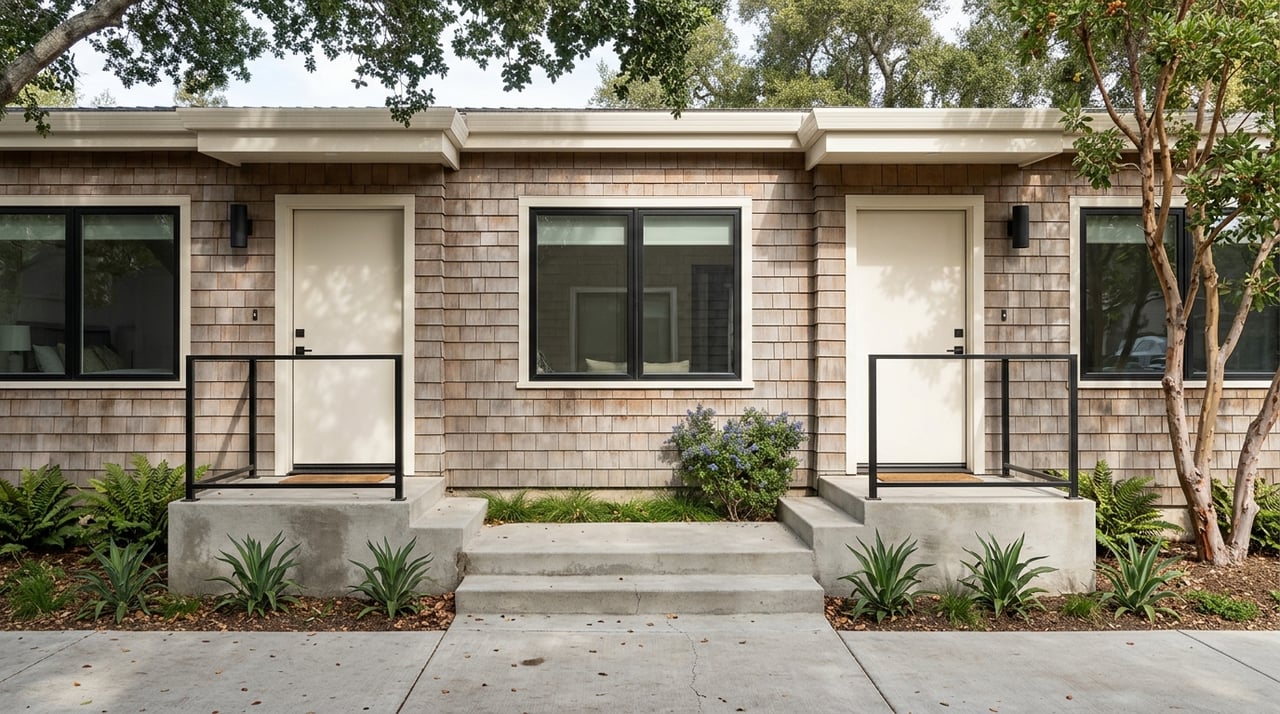
If you are looking at small multi-unit property in San Rafael, broad market averages will only get you so far. Duplexes, triplexes, and fourplexes are a real part of the local housing mix, but they make up a much smaller slice of the city than detached homes and larger apartment properties. That means the best opportunities often come from understanding the micro-market, the zoning, and the property-specific rules before you make a move. Let’s dive in.
San Rafael Has a Real Small Multi-Unit Niche
San Rafael is still mainly a single-family home city, but the numbers show a meaningful small multifamily footprint. The city’s housing data lists 887 duplex and 2-to-4-unit homes and 9,238 5-plus-unit homes out of 23,906 total housing units.
That matters because small multi-unit deals are not everywhere in San Rafael. They exist, but inventory is relatively limited, so buyers usually benefit from looking at each pocket of the city on its own rather than assuming one citywide trend tells the full story.
Why Micro-Markets Matter Here
In San Rafael, one duplex is not automatically comparable to another duplex across town. The city has a dedicated Duplex Residential District and several Multifamily Residential Districts, along with commercial areas where multifamily may be allowed in some cases.
The city also includes overlays and special planning areas that can affect what you can do with a property. Hillside, wetland, canalfront, and other overlay conditions can shape renovation plans, future expansion, and ongoing use. This is where local, parcel-level review becomes especially important.
Downtown San Rafael Is a Key Cluster
If you want the clearest concentration of small multi-unit opportunities, downtown deserves close attention. The city describes Downtown San Rafael as its commercial, employment, and transit center, and the Downtown Precise Plan creates a unified framework for future growth.
That plan covers areas such as West End Village, Fifth/Mission, Second/Third Corridor, Lindaro, Hetherton Gateway, and the Fourth Street Retail Core. It also identifies planning opportunity for more than 2,000 new housing units, which helps explain why downtown property patterns can differ from more residential parts of the city.
Downtown Deals Need Tight Comp Selection
Downtown is not just another neighborhood on a map. The Downtown Precise Plan uses a form-based code that replaces many conventional zoning rules in that area.
For you as a buyer, that means comparable sales should be matched carefully by district, building form, and permitted use. A small apartment building downtown may follow a very different logic than a similar-sized property outside the downtown plan area.
SMART Station Areas Deserve Attention
Another important area for small multi-unit analysis is near the SMART stations. The city prepared station-area plans for Downtown San Rafael and North San Rafael/Marin Civic Center, with recommendations tied to land use, zoning, urban design, and circulation.
That makes transit access more than a lifestyle feature. In these locations, proximity to a station is part of the broader planning framework that supports denser housing patterns, which can affect both buyer interest and future potential.
The Canal Area Has Extra Layers
The Canal and Canalfront area is another pocket worth watching, but it comes with added complexity. The city has adopted planning and design guidance there, and properties in the Canal Opportunity Zone are subject to special relocation rules.
If you are evaluating a value-add deal in this part of San Rafael, location can have a direct impact on cost and timing. Two similar buildings may look alike on paper, yet one may carry different tenant relocation obligations if substantial work is planned.
Rental Demand Looks Relatively Supportive
For many buyers, the next question is simple: is there enough renter demand to support a small multi-unit purchase? In San Rafael, the answer appears fairly supportive based on occupancy and tenure patterns.
U.S. Census QuickFacts shows an owner-occupied rate of 53.0% for 2020 through 2024, which implies that about 47% of occupied housing is renter-occupied. The city’s housing data also shows 95% occupancy overall, with the largest vacant category listed as for rent.
San Rafael Sits in a Tight County Market
San Rafael is also part of a county where housing availability remains limited. Bay Area Census data shows Marin County at 93% occupancy, with nearby communities also posting high occupancy levels.
That does not guarantee performance for any specific property, of course. Still, it suggests San Rafael is operating in a generally tight regional housing environment, so conservative vacancy assumptions usually make more sense than overly optimistic turnover expectations.
More Renter-Balanced Than Some Nearby Towns
San Rafael also appears somewhat more renter-balanced than several nearby Marin communities. The city’s 53% owner-occupied rate is lower than the owner-occupied shares reported for places like San Anselmo, Mill Valley, and Sausalito.
For small multi-unit buyers, that can be useful context. It suggests San Rafael may offer a broader local renter base than some nearby towns that lean more heavily toward owner occupancy.
What to Underwrite First
When you evaluate a duplex, triplex, or fourplex in San Rafael, start with the basics that most affect risk and value. Legal unit count, zoning, overlays, and building-specific use questions should come before assumptions about upside.
This is where appraisal-minded analysis matters. A property’s income potential is important, but in San Rafael, the operational and regulatory details can influence returns just as much as the headline price.
Check Zoning and Overlay Conditions
Before you get attached to a deal, verify the parcel’s zoning district and whether any overlay applies. The city’s zoning framework includes multiple residential districts as well as special overlay conditions, and downtown follows its own code structure.
That means a renovation, addition, or reconfiguration may be straightforward on one parcel and much more restricted on another. Matching the property to the right local rules is a key step in realistic underwriting.
Review ADU Potential Carefully
ADU potential can materially affect the value story in San Rafael, but the rules are specific. The city allows attached ADUs up to 1,000 square feet or 50% of the existing residence, with 800 square feet always allowed. Detached ADUs may be up to 1,000 square feet, and conversion ADUs in existing space have no maximum size when that space is being converted.
For multifamily properties, the rules are different. Conversion ADUs may occur only in existing non-habitable space, the city allows at least one ADU up to 25% of existing multifamily units, and up to two detached ADUs may be allowed. JADUs are not allowed in multifamily structures.
Triplexes and Fourplexes Have More Compliance Rules
Once you move into properties with three or more units, San Rafael’s local operating rules become more important. The city’s Housing Inspection Program covers all residential rental properties with three or more units and requires inspection at least once every five years.
The city’s Cause for Eviction ordinance applies to properties with at least three separate dwelling units. Mandatory Mediation applies to all rental units and can be triggered by rent increases of more than 5% in a 12-month period, and Source of Income Protection applies to all rental units.
Budget for Relocation and Improvement Risk
If your plan involves major improvements, tenant relocation rules need attention early. San Rafael requires relocation assistance for low-income tenants displaced by development or property improvements, and the Canal Opportunity Zone includes additional temporary relocation and right-to-return requirements.
This does not mean value-add opportunities are off the table. It does mean your timeline, construction budget, and tenant planning should reflect local rules before you rely on a future income scenario.
A Practical San Rafael Buying Approach
If you are exploring small multi-unit deals in San Rafael, a grounded process can help you avoid expensive assumptions. Focus less on generic cap rate talk and more on the details that actually drive performance in this market.
A practical review often includes:
- Confirming the legal unit count
- Checking the zoning district and any overlay conditions
- Reviewing whether the property falls in downtown, a station area, or the Canal Opportunity Zone
- Evaluating current rent, likely vacancy, and operating expenses
- Reserving for near-term capital work
- Accounting for inspection, tenant protection, and relocation-related costs where relevant
- Reviewing whether ADU or conversion potential is realistic under city rules
Why Local Guidance Matters
In a market like San Rafael, small multi-unit deals reward precision. The city has a real renter base, limited small multifamily inventory, and several planning areas where zoning and compliance details can change the economics of a purchase.
That is why local guidance matters so much. When you combine neighborhood knowledge with appraisal-informed analysis, you can compare properties more accurately, price risk more realistically, and move forward with greater confidence.
If you are considering a duplex, triplex, fourplex, or other small investment property in San Rafael, working with a local advisor who understands Marin micro-markets can make the search far more efficient. To talk through opportunities with a neighborhood-focused, appraisal-informed expert, connect with Ruth Linn.
FAQs
What makes small multi-unit deals in San Rafael different from other Marin markets?
- San Rafael has a meaningful but limited supply of duplexes, triplexes, and small apartment buildings, along with a more renter-balanced housing mix than some nearby Marin towns. Local zoning districts, downtown rules, and overlay conditions can also make property analysis more complex.
Where are duplexes and triplexes most likely to cluster in San Rafael?
- The clearest cluster is in Downtown San Rafael. Other important areas include the SMART station areas near Downtown San Rafael and North San Rafael/Marin Civic Center, as well as parts of the Canal and Canalfront area.
Why does zoning matter when buying a San Rafael multi-unit property?
- Zoning affects what uses are allowed, how a property may be improved, and whether future expansion is realistic. In San Rafael, downtown properties, overlay areas, and multifamily districts can all create different rules from one parcel to another.
Can you add an ADU to a small multi-unit property in San Rafael?
- In some cases, yes. San Rafael allows certain ADU conversions in existing non-habitable multifamily space, allows at least one ADU up to 25% of existing multifamily units, and may allow up to two detached ADUs, subject to city rules.
What local rules apply to triplexes and fourplexes in San Rafael?
- Properties with three or more units are subject to the city’s Housing Inspection Program. Certain tenant protection rules also apply, including Cause for Eviction for properties with at least three separate dwelling units, while Mandatory Mediation and Source of Income Protection apply more broadly to rental units.
Is rental demand strong enough to support a San Rafael small multi-unit purchase?
- San Rafael appears to have supportive rental demand based on its renter share and high occupancy. The city’s occupancy is listed at 95%, and it sits within a Marin County market that also shows limited housing slack overall.